Best Dog Food for Mini Australian Shepherds
Short answer: look for a food with 22-26% protein and 12-16% fat formulated for active medium-energy breeds, real meat as the first ingredient, and avoid grain-free unless your vet specifically recommends it.
What to Look For on the Label
- Named meat first ingredient, “chicken” or “chicken meal,” not vague “meat by-products”
- 22-26% protein, 12-16% fat, matches this breed’s activity level without over-conditioning a less active individual
- AAFCO life-stage statement, confirms the food is formulated as complete and balanced for the dog’s actual life stage, not just a general “all life stages” label with no substantiation
- No excessive filler, corn, wheat, and soy aren’t inherently harmful in moderate amounts, but a food leading with them over meat is lower quality
Why We’re Not Naming Specific Brands
Pet food formulations and recalls change often, and specific brand recommendations go stale fast. The label criteria above will filter to a quality shortlist regardless of which brands are currently on shelf, that’s a more durable approach than a “best of 2026” list that’s outdated within a year.
The Grain-Free Question
The FDA has investigated a potential link between grain-free diets and dilated cardiomyopathy (DCM) in dogs. The evidence isn’t fully conclusive, but given the uncertainty, grain-inclusive is the safer default unless your vet has a specific medical reason to recommend grain-free for your dog.
Raw and Fresh Diets
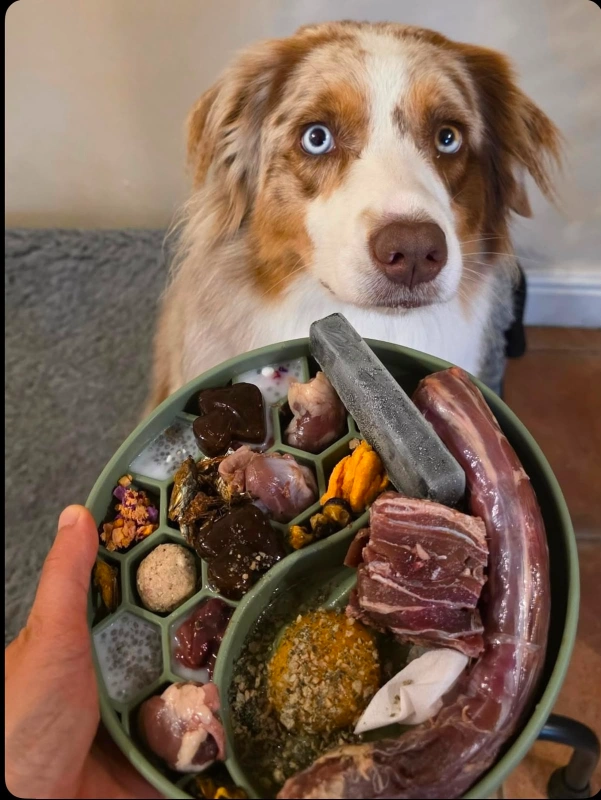
Raw and fresh-food diets have real advocates and can work well when properly balanced, but “properly balanced” is the operative phrase, home-prepared raw diets that aren’t formulated to AAFCO standards commonly run short on calcium, specific micronutrients, or overall balance. If you’re considering raw or fresh feeding, work with a veterinary nutritionist to formulate it, or choose a commercial raw/fresh brand that states AAFCO compliance rather than freelancing the recipe.
Feeding Amounts
Most adult Mini Aussies do well on roughly 1.0-1.5 cups of quality dry kibble daily, split into two meals, but this varies with activity level, metabolism, and the specific food’s calorie density. Use the package guideline as a starting point and adjust based on body condition, not a fixed number.
Related Reading
- Complete Nutrition & Feeding Guide, feeding schedule by life stage and toxic foods list
- Exercise Guide, activity level affects calorie needs
Wet, Dry, or Raw: What Actually Matters
The format matters less than the nutritional content behind it. Quality kibble that meets the protein/fat targets above is a perfectly reasonable default for most owners, dental benefits from kibble’s texture are modest but real. Wet food can help picky eaters or dogs needing extra hydration but tends to cost more per calorie. Raw diets require careful formulation to avoid nutritional gaps, work with a veterinary nutritionist rather than assembling one from general internet guidance if you go this route, this is one area where getting it wrong has real consequences for a growing puppy especially.
Frequently Asked Questions
Is grain-free food bad for Mini Aussies?
Not automatically, but the FDA has flagged a possible link to heart disease (DCM) in dogs on grain-free diets. Grain-inclusive is the safer default absent a specific vet recommendation otherwise.
How much protein does a Mini Aussie need?
For an active adult, 22-26% protein is a reasonable target; working or highly active dogs may do well at the higher end of that range.
Should puppies eat a different food than adults?
Yes, puppy formulas provide higher calorie density and calcium/phosphorus ratios calibrated for growth. Switching to an adult formula too early or too late can affect development, follow the specific product’s life-stage guidance or your vet’s recommendation.
How do I transition to a new food without upsetting my dog’s stomach?
Mix increasing amounts of the new food with the old over 7-10 days rather than switching abruptly. A sudden full switch is one of the most common causes of temporary diarrhea or vomiting in an otherwise healthy dog.