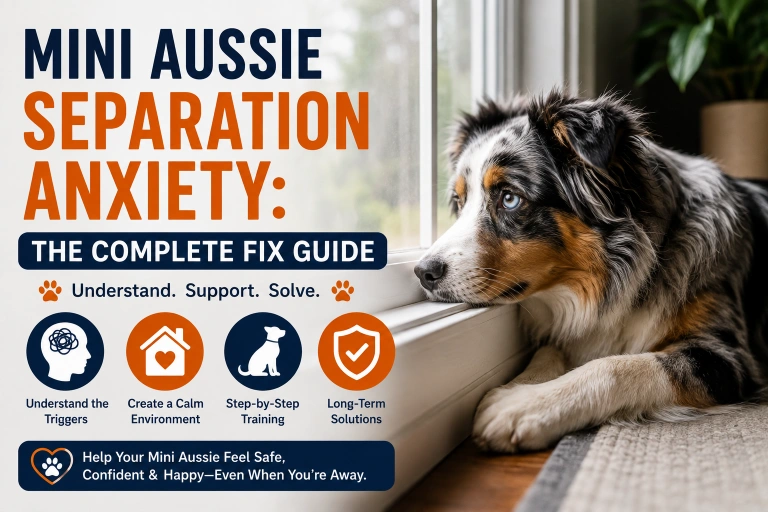
Mini Aussie Separation Anxiety: The Complete Fix Guide
Short answer: separation anxiety in Mini Aussies is a genuine anxiety response, not disobedience, crate training done right, gradual alone-time conditioning, and pre-departure exercise fix most cases within weeks; severe cases benefit from vet-guided medication alongside training.
How to Tell It’s Actually Separation Anxiety
Look for symptoms that happen specifically around departures and while alone: destructive chewing concentrated at doors/windows, prolonged barking or howling starting soon after you leave, house-soiling despite being fully house-trained, pacing, drooling, or attempts to escape confinement. If the destructive behavior happens randomly whether you’re home or not, that’s more likely boredom or insufficient exercise than true separation anxiety.
The Gradual Desensitization Method
- Decouple departure cues from actual leaving. Pick up your keys, put on shoes, then sit back down. Repeat until these actions stop triggering anxiety.
- Start with seconds, not minutes. Leave the room, close the door, come right back. Gradually extend duration only as the dog stays calm.
- Build to short real departures. A few minutes outside, then longer, over days to weeks, not a single jump from 30 seconds to 4 hours.
- Never make a big deal of arrivals or departures. A calm, low-key entrance and exit teaches the dog these moments aren’t significant events.
Setting Up for Success Each Day
Exercise the dog thoroughly before any departure, a tired dog handles alone-time far better than one at full energy. A frozen Kong or puzzle feeder given right as you leave creates a positive association with your departure and provides 15-30 minutes of engaged distraction during the hardest part (right after you go).
When to Get Professional Help
If the dog is injuring itself trying to escape, if progress stalls despite consistent desensitization work over several weeks, or if the anxiety is severe enough to affect the dog’s ability to eat or rest while alone, a certified behaviorist and a conversation with your vet about anti-anxiety medication (used alongside training, not instead of it) is the appropriate next step. This isn’t a failure of training, some dogs need pharmaceutical support to make behavioral progress possible.
Doggy Daycare and Dog Walkers as Part of the Fix
Training alone isn’t always enough on a normal workday. A midday dog walker or a couple of daycare days a week genuinely reduces the total hours of daily isolation, which matters more than most owners expect, this breed’s threshold for comfortable alone time is lower than many others. Combine this with the desensitization work above rather than treating it as a substitute for training. Pair it with proper daily exercise before you leave, a tired dog settles into alone time far more easily than a wound-up one.
Related Reading
Frequently Asked Questions
How long can a Mini Aussie be left alone?
Most well-exercised adults handle 4-6 hours; puppies under 6 months shouldn’t exceed 2-3 hours. Beyond that without a midday arrangement, behavioral problems become likely.
Does a second dog fix separation anxiety?
Sometimes, but not reliably, some dogs’ anxiety is specifically about human absence, not being alone in general, so a second dog doesn’t always solve it. Training remains the more consistent fix.
How long does it take to fix separation anxiety?
Mild cases often improve within 2-4 weeks of consistent desensitization work. Moderate to severe cases can take several months, and some dogs need ongoing management rather than a complete “cure.” Patience and consistency matter more than speed here.
Should I get a pet camera to check on my dog?
It’s genuinely useful, not for hovering, but for honestly assessing how your dog behaves alone so you can gauge whether your training is working or the plan needs adjusting.