Hip Dysplasia in Mini Aussies: Signs, Prevention, and Treatment
Short answer: hip dysplasia is a malformation of the hip joint that’s common enough in Mini Aussies to screen for, OFA-tested parents cut the risk significantly, and early management (weight control, joint supplements, controlled exercise) makes a real difference if your dog develops it.
What It Actually Is
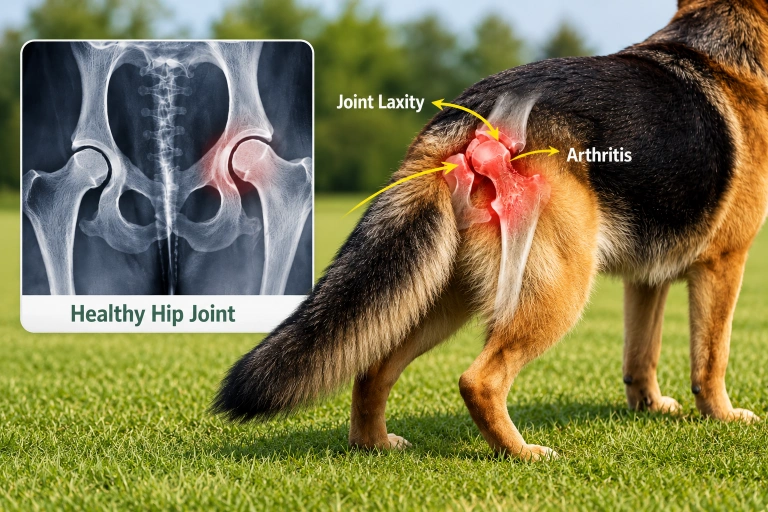
Hip dysplasia happens when the ball-and-socket hip joint doesn’t fit or develop correctly, causing the bones to grind and deteriorate over time instead of sliding smoothly. It’s partly genetic and partly influenced by growth-rate, weight, and exercise during puppyhood.
Warning Signs to Watch For
- Difficulty rising from lying down or reluctance to jump/climb stairs
- A “bunny hop” gait when running (both back legs moving together)
- Decreased activity or reluctance to exercise as previously enjoyed
- Audible clicking or grinding from the hip area
- Muscle loss in the hind legs over time
Signs can appear as early as 5 months in severe cases, or not until middle age in milder cases.
Prevention Starts Before You Even Get the Puppy
Ask any breeder for OFA (Orthopedic Foundation for Animals) hip evaluations on both parents, this is the single biggest risk-reduction step available, and any reputable breeder can produce documentation. Once you have the puppy, avoid high-impact exercise (jumping, repetitive stairs, forced long runs) until growth plates close around 12-18 months, and keep the dog lean, excess weight on a developing joint measurably increases dysplasia risk and severity.
Treatment If It Develops
Mild cases are often managed with weight control, joint supplements (glucosamine/chondroitin, omega-3s), controlled low-impact exercise like swimming, and anti-inflammatory medication as needed. Moderate to severe cases may need surgical options ranging from a femoral head osteotomy to full hip replacement, decided in consultation with a veterinary orthopedic specialist based on the dog’s age, severity, and activity goals.
Weight Is the Factor You Actually Control
Genetics set the baseline risk, but body weight determines how much that joint actually suffers day to day. A lean dog puts meaningfully less mechanical stress on a compromised hip than an overweight one carrying the same diagnosis, sometimes the difference between a dog that manages comfortably on supplements and one that needs surgery years earlier than it otherwise would. Our nutrition guide covers practical portion control, this is one condition where keeping weight in check isn’t just general health advice, it’s directly protective.
Related Reading
- Complete Health Overview, all breed-specific conditions in one place
- Exercise Guide, age-appropriate activity levels
Frequently Asked Questions
At what age do hip dysplasia symptoms show up?
Severe cases can show signs as early as 5 months; milder cases may not become noticeable until middle age or later.
Can hip dysplasia be prevented entirely?
Not entirely, since genetics play a role, but OFA-tested parents, a lean body condition, and avoiding high-impact exercise during growth meaningfully reduce risk and severity.
What’s the difference between OFA and PennHIP screening?
Both evaluate hip conformation via X-ray, but PennHIP measures joint laxity more precisely and can often detect risk earlier, sometimes before 2 years old, while OFA’s standard evaluation typically requires the dog to be 2 years or older for a final rating. Either is far better than no screening at all.
Does hip dysplasia mean my dog needs surgery?
Not necessarily. Many dogs manage well long-term with weight control, joint supplements, physical therapy, and activity modification. Surgery is generally reserved for more severe cases or when conservative management isn’t providing adequate quality of life.