Mini Aussie in Hot Weather: Heatstroke Risks and Prevention
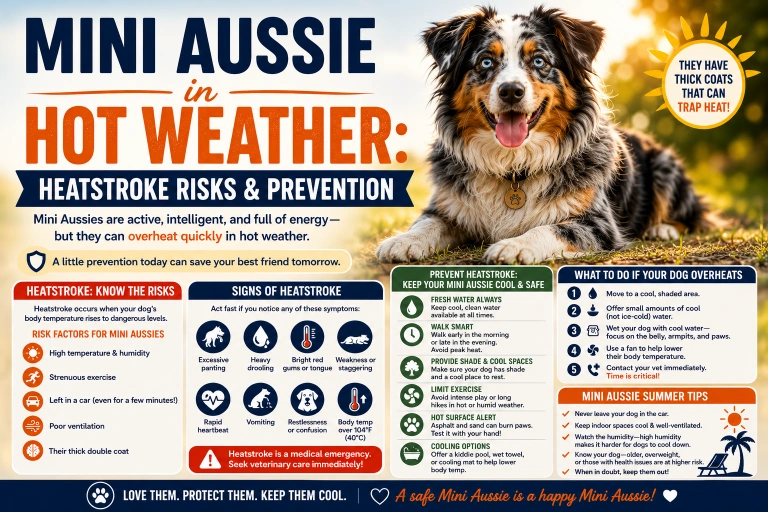
Short answer: Mini Aussies can overheat faster than expected because their double coat and high drive to keep exercising past their limits combine badly, watch for heavy panting, bright red gums, and reluctance to move, and never rely on shaving the coat as a cooling strategy.
Why This Breed Is Actually at Higher Risk
Two factors work against Mini Aussies in heat: their double coat, which insulates well but also traps heat if not properly maintained, and their working-dog drive, which means they’ll often keep running, fetching, or herding past the point they should stop, they don’t self-regulate the way a lower-drive breed might.
Recognizing Heatstroke Early
- Heavy, rapid panting that doesn’t slow with rest
- Bright red or purple gums and tongue
- Excessive drooling
- Wobbly gait, disorientation, or collapse
- Vomiting
Heatstroke is a genuine emergency, if you see these signs, move the dog to shade/AC immediately, apply cool (not ice-cold) water to the body, and get to a vet immediately even if the dog seems to recover, since internal damage can occur without obvious external signs.
Practical Summer Management
- Exercise during cool hours. Early morning or evening, never midday during summer heat.
- Never shave the coat to “cool” the dog. The double coat actually helps regulate temperature and provides sun protection; shaving disrupts this and risks permanent coat damage.
- Provide constant access to fresh water, and bring water on any outing longer than 15-20 minutes.
- Never leave the dog in a parked car, even briefly, even with windows cracked, car interiors heat dangerously fast.
- Check pavement temperature with the back of your hand before walks; if it’s too hot for your hand, it’s too hot for paws.
Swimming and Water Play as Safe Summer Exercise
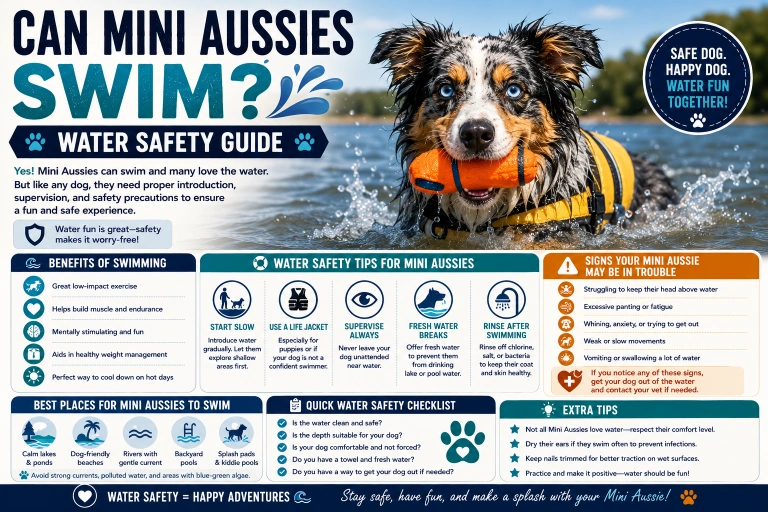
Because this breed won’t reliably self-regulate in heat, swapping some hot-day activity for water play is one of the smartest changes an owner can make. A confident swimmer can burn real energy without the same overheating risk as running or fetch on hot pavement. See our water safety guide if your dog isn’t already a comfortable swimmer, introducing it properly matters more in the middle of a heat wave than it does in cooler weather.
The Working-Dog Drive Problem, In Practice
This is worth repeating because it’s the actual mechanism behind most heat emergencies in this breed: a Mini Aussie will often keep playing fetch, keep herding, keep running well past the point a lower-drive dog would simply lie down. That drive is exactly what makes them such capable working and sport dogs, and it’s exactly why the owner has to be the one enforcing breaks, water, and shade on hot days rather than waiting for the dog to ask for them.
Related Reading
- Grooming Guide, why never to shave the double coat
- Exercise Guide
- Water Safety Guide
Frequently Asked Questions
Should I shave my Mini Aussie for summer?
No. The double coat helps regulate temperature and provides sun protection. Shaving disrupts this system and can cause permanent coat damage without meaningfully reducing heat risk.
What are the first signs of heatstroke in a dog?
Heavy panting that doesn’t slow with rest, bright red gums, excessive drooling, and reluctance to move. These warrant immediate cooling and a vet visit.
Can I use a cooling vest or mat instead of avoiding heat altogether?
Cooling vests and mats can help at the margins, but they’re a supplement, not a substitute for avoiding peak-heat exercise. Don’t let a cooling product give you false confidence to push exercise timing you’d otherwise avoid.
Is water from a hose or sprinkler a good way to cool down a hot dog?
Yes, cool (not ice-cold) water on the belly, armpits, and paw pads helps dissipate heat quickly. Avoid ice-cold water on an overheated dog, the rapid temperature change can cause blood vessels to constrict and actually trap heat inside the body.