Mini Aussie Allergies: Skin, Food, and Environmental
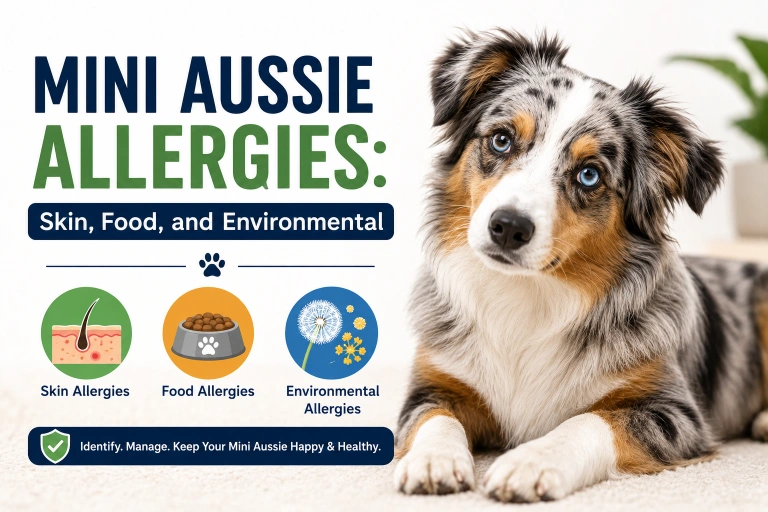
Short answer: Mini Aussies can develop skin allergies, food allergies, and environmental (seasonal) allergies, itching, licking paws, and recurrent ear infections are the most common signs, and identifying the specific trigger usually takes an elimination process with your vet.
The Three Types
Environmental (Atopic) Allergies
Reactions to pollen, dust mites, mold, or grass, often seasonal, though year-round exposure (dust mites) can cause constant symptoms. This is the most common allergy category in dogs generally.
Food Allergies
A true food allergy is an immune reaction to a specific protein (commonly chicken, beef, or dairy), different from food intolerance which is a digestive sensitivity. Food allergies often show up as skin symptoms as much as digestive ones.
Flea Allergy Dermatitis
An allergic reaction to flea saliva, where even a single bite triggers intense itching in a sensitive dog, consistent flea prevention is the fix here, not just treating symptoms.
Signs Across All Types
- Excessive licking or chewing at paws
- Face rubbing on furniture or carpet
- Recurrent ear infections (a very common allergy sign owners often miss)
- Red, inflamed, or scabbed skin, especially belly, armpits, and paws
- Hair loss in patches from scratching or licking
Figuring Out the Trigger
Environmental allergies are typically diagnosed by a vet based on seasonal pattern and sometimes allergy testing. Food allergies require an elimination diet, a novel protein or hydrolyzed prescription diet fed exclusively for 8-12 weeks, then reintroducing the old food to confirm the reaction. Guessing and randomly switching foods rarely identifies the actual trigger; the elimination process, done properly, does.
Management
Depending on the type and severity: consistent flea prevention (MDR1-safe products), omega-3 supplementation for skin barrier support, medicated shampoos for skin symptoms, and in more severe environmental cases, prescription medications (like apoquel or cytopoint) that your vet can discuss. Chronic ear infections tied to allergies usually need the underlying allergy addressed, not just repeated ear treatments.
The Elimination Diet Process
Diagnosing a true food allergy takes real patience: a strict novel-protein or hydrolyzed diet for 8-12 weeks with zero treats, table scraps, or flavored medications that could reintroduce the trigger. Symptoms improving during this window, then returning when the old diet resumes, confirms the allergy. This process only works with full commitment, a single slip-up treat can restart the clock. Our dog food guide covers what to look for once you’ve identified a safe protein source.
Related Reading
Frequently Asked Questions
What’s the most common food allergen for dogs?
Chicken and beef are among the most commonly reported food allergens in dogs, followed by dairy and wheat, though any protein can theoretically trigger a reaction in an individual dog.
Can allergies suddenly develop in an adult dog?
Yes. Allergies often develop after repeated exposure over months or years rather than at first contact, so a dog can eat the same food for years before developing a reaction to it.
Are allergies more common in Mini Aussies than other breeds?
They’re not considered an especially allergy-prone breed compared to many others, but any individual dog can develop allergies regardless of breed. Skin and coat issues in this breed are more often related to grooming and shedding management than true allergy.
Should I switch foods every time my dog has itchy skin?
No, constantly switching foods actually makes identifying a real food allergy harder, not easier. Talk to your vet about a proper elimination trial rather than guessing your way through random food changes.