
Why Won’t My Mini Aussie Calm Down?
Short answer: a “hyper” Mini Aussie is almost always under-exercised, mentally under-stimulated, or both, not badly behaved. Fix the input before trying to fix the output.
Check the Math First
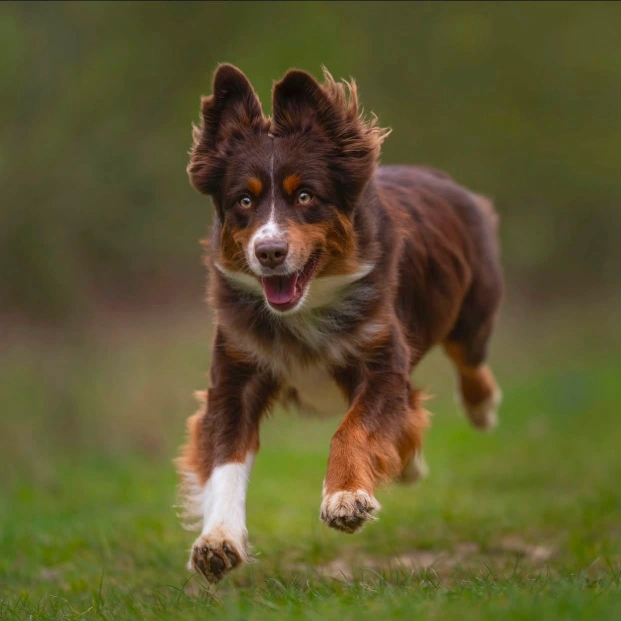
This breed needs a minimum of 60-90 minutes of genuinely vigorous exercise daily, running, fetch, hiking, agility, not a leashed stroll around the block. If your dog is getting less than that, the restlessness, zoomies, and inability to settle aren’t a training problem; they’re an unmet-need problem, and no amount of “obedience work” fixes an energy deficit.
Physical Tired Isn’t the Same as Mentally Tired
A dog that ran for an hour but got zero mental engagement can still be wound up. Add 10-15 minutes daily of puzzle feeders, scent games, or new trick training on top of physical exercise. Mentally taxing activity often tires a smart breed faster than pure running does.
Building an Off-Switch
Some Mini Aussies are physically and mentally satisfied but still don’t know how to settle because they’ve never been taught to. Teach a “place” or “settle” command: reward calm behavior on a mat, gradually increasing duration. Practice this daily, separate from exercise, so the dog learns stillness is also rewarded, not just activity.
Red Flags Worth a Vet Visit
If exercise and mental stimulation are genuinely adequate and the dog still can’t settle, rule out pain (a dog in low-grade discomfort can present as restless rather than sedentary), and consider whether it’s anxiety-driven rather than energy-driven, those need a different approach than “more exercise.”
When It’s Not Just Energy
Occasionally, an inability to settle is anxiety wearing an “energy” costume, a dog that can’t relax even after a genuinely tired-out day, paces, pants at rest, or seems unable to disengage regardless of how much exercise it gets, may be dealing with something closer to generalized anxiety than a simple exercise deficit. If you’ve honestly ruled out the exercise and mental stimulation math above and nothing’s changing, that’s worth a conversation with a trainer or vet rather than pushing harder on the same approach.
Related Reading
- Complete Exercise Guide, activity breakdown by type and age
- Complete Training Guide, command order including settle/place training
Frequently Asked Questions
How much exercise does a hyper Mini Aussie need?
At minimum 60-90 minutes of vigorous activity daily, plus separate mental stimulation. Most “hyper” complaints trace back to falling short of this.
Can too much exercise make a dog more hyper?
In young, growing puppies, over-exercising before growth plates close can cause other problems, but in healthy adult dogs, under-exercise is the far more common cause of restlessness than over-exercise.
At what age should a Mini Aussie naturally start to calm down?
Most show some natural settling by 2-3 years as full maturity sets in, but “calm” is relative for this breed, it still needs daily structured activity for life, just often with a bit more of an off-switch than it had as a young adult.
Do puzzle toys really make a difference for a high-energy dog?
Yes, noticeably. Mental problem-solving taps into a different kind of fatigue than running does, and many owners find 15 minutes of a genuinely challenging puzzle feeder settles their dog faster than an extra lap around the block.