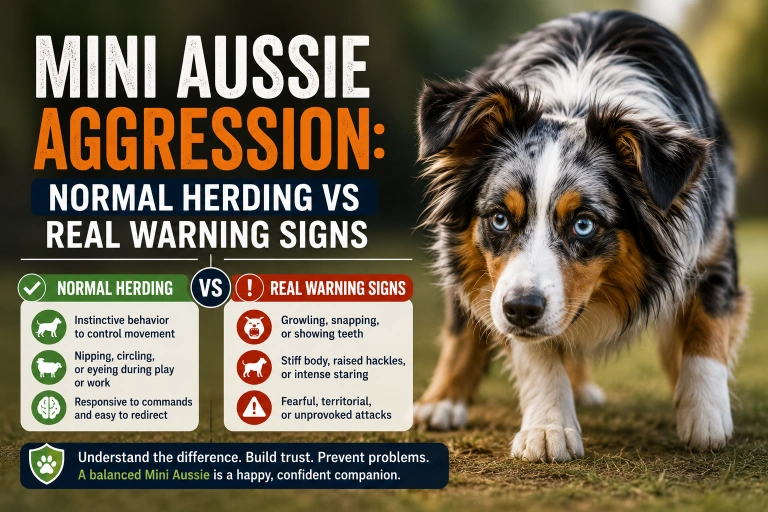
Mini Aussie Aggression: Normal Herding vs Real Warning Signs
Short answer: what looks like aggression in a Mini Aussie is almost always herding behavior, nipping, circling, staring, barking at movement. True aggression is rarer and looks distinctly different: stiff body, prolonged direct eye contact, growling with intent, and snapping meant to cause harm rather than redirect movement.
Herding Behavior (Normal, Manageable)
- Nipping at heels of moving people, especially running children
- Circling to “gather” people or other pets into a group
- Intense staring or “eyeing” at moving targets
- Barking at fast movement (bikes, cars, running)
- Body posture: alert, low, focused, but not stiff or defensive
This behavior is triggered specifically by movement and stops or redirects easily once the movement stops or the dog is given an alternative command. It’s genetic, present from a young age, and responds well to consistent redirection training.
True Aggression (Less Common, Needs Professional Help)
- Stiff, frozen body posture, weight shifted forward
- Prolonged direct staring with intent, not just tracking movement
- Growling with a low, sustained tone (different from play growling)
- Snapping or biting that connects and is meant to cause harm, not just make contact
- Triggered by resource guarding, fear, pain, or territorial defense, not simply movement
- Doesn’t resolve with a simple redirect cue; the dog stays fixated
The Key Diagnostic Question
Ask: does the behavior stop when the movement stops, and does the dog respond to a redirect cue (sit, come)? If yes, it’s almost certainly herding. Does the behavior persist or escalate even when the “trigger” (a running child, a passing dog) is gone, or is it directed at something stationary (a person reaching for the dog’s food, a stranger simply standing still)? That pattern points toward genuine aggression, fear, or resource guarding, which needs a different approach.
What to Do If You’re Not Sure
When in doubt, don’t guess, a session with a certified professional dog trainer or veterinary behaviorist (look for CPDT-KA or IAABC credentials) can assess the specific behavior pattern in person and rule out pain or medical causes, which sometimes present as sudden behavior changes that look like aggression.
When “Aggression” Is Actually Pain
A sudden behavior change in an adult dog, snapping when touched in a specific spot, growling when picked up, unusual irritability, deserves a vet visit before a training plan. Conditions like hip dysplasia or an ear infection can make a normally easygoing dog defensive purely out of pain, and no amount of behavioral redirection fixes a medical problem. Rule out pain first, especially if the change is sudden rather than a lifelong pattern.
Related Reading
- Complete Training Guide, herding redirect protocol
- Why Does My Mini Aussie Nip at Heels?
Frequently Asked Questions
Are Mini Aussies naturally aggressive?
No. They’re not considered an aggressive breed. What owners often mistake for aggression is herding instinct, which looks and functions very differently from true aggression.
What should I do if my Mini Aussie growls at a family member?
Take it seriously and observe the context, a low, sustained growl paired with stiff posture is different from a play growl. If it happens repeatedly or in specific situations (near food, being touched in a certain way), consult a professional trainer or behaviorist rather than guessing at the cause.
Can pain really cause sudden aggressive behavior?
Yes, and it’s one of the most overlooked causes of a sudden personality change in an otherwise easygoing dog. Any abrupt shift toward snapping, growling, or irritability warrants a vet visit before assuming it’s a training or temperament issue.
Is herding-related nipping something my dog will grow out of?
Not entirely on its own, it’s genetic and lifelong, but it becomes very manageable with consistent redirection training. Most well-trained adult Mini Aussies still have the instinct, they’ve just learned an acceptable outlet for it.