Why Does My Mini Aussie Nip at Heels? (And How to Stop It)
Short answer: heel-nipping is herding instinct, not aggression or a training failure, it’s triggered by movement, and it’s fixed by redirection and outlet, not punishment.
Why It Happens
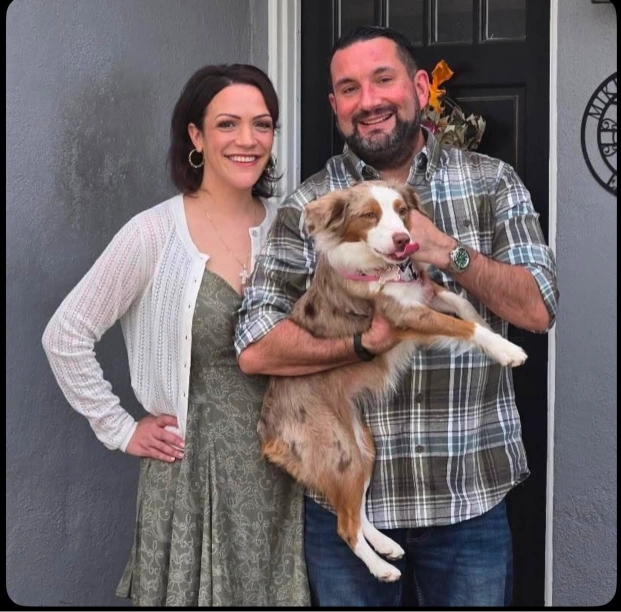
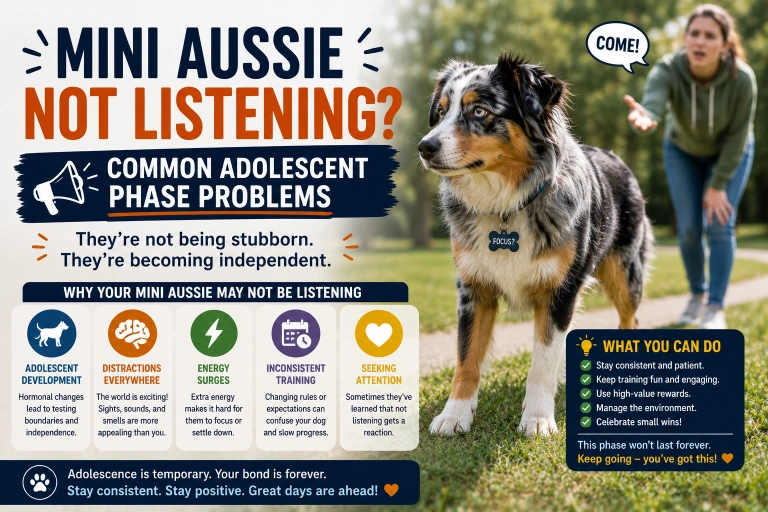
Mini Australian Shepherds are herding dogs, and herding is a fixed behavior pattern bred into the breed for generations: eye-stalking, circling, and nipping at the heels of moving “livestock” to control its direction. In a house, the moving target is usually a running child, a jogger, a bicycle, or another pet, and the nip is the dog’s genetic instruction kicking in, not a discipline problem.
This matters because it changes the fix. Punishing a herding nip tends to suppress the visible behavior while raising the dog’s anxiety, which often makes the underlying drive worse, not better.
The Fix: Redirect, Don’t Punish
- Interrupt calmly. The instant the stalking posture or nip starts, use a neutral sound, a clap or a flat “ah-ah”, not a scolding tone.
- Cue an incompatible behavior. Ask for a sit, down, or come immediately after the interrupt.
- Reward the alternative generously. The dog needs to learn the new behavior pays better than the old one.
- Give the drive a legitimate outlet daily. A flirt pole, herding balls, or a hard game of fetch lets the dog “herd” something appropriate. A Mini Aussie with no outlet for this drive will find one, usually your kids or your other pets.
When It’s More Than Nipping
Occasional mouthing during play, especially in puppies who are also teething, is normal and different from a herding nip. If the behavior is drawing blood, escalating despite consistent redirection, or paired with genuine aggressive signals (stiff body, prolonged staring, growling with intent), that’s worth a session with a certified force-free trainer rather than continued DIY correction.
Teaching Children How to Respond
Half the fix happens on the human side. Teach kids in the house that stopping and standing still (rather than running away or squealing) short-circuits the instinct fast, movement is the trigger, and stillness removes it. Practice this deliberately in calm, controlled moments rather than only reacting mid-incident, kids who understand the “why” behind the behavior tend to handle it far better than ones just told “don’t run near the dog.” This pairs directly with the redirect-and-reward approach above, it’s not a replacement for it.
Related Reading
- Complete Training Guide, command order, training timeline, and the full herding-management protocol
- Exercise Needs Guide, how much daily outlet this breed actually requires
Frequently Asked Questions
Is heel-nipping a sign of aggression?
Almost never. It’s herding instinct triggered by movement. True aggression involves different body language, stiffness, prolonged direct staring, and growling with intent to harm, and is far less common.
Will my Mini Aussie grow out of nipping?
The instinct itself doesn’t disappear, but with consistent redirection and a daily outlet, most dogs stop directing it at people within weeks to a few months.
What’s a good outlet for the herding drive besides nipping people?
Herding balls (large, durable balls made for nose and body pushing), flirt poles, fetch, and agility all give the drive somewhere legitimate to go. A dog getting regular access to one of these is noticeably less likely to redirect that energy toward family members.
Should I feel bad about redirecting my dog away from herding?
No, redirection isn’t suppression, it’s giving the instinct an acceptable job instead of an unacceptable one. The dog still gets to express the drive, just in a way that doesn’t involve nipping people.