Traveling with a Mini Aussie: Car Rides and Flying
Short answer: Mini Aussies generally travel well given their size and trainability, but success depends on proper crate/restraint training beforehand, meeting their exercise needs before long trips, and specific prep for flying versus driving.
Car Travel
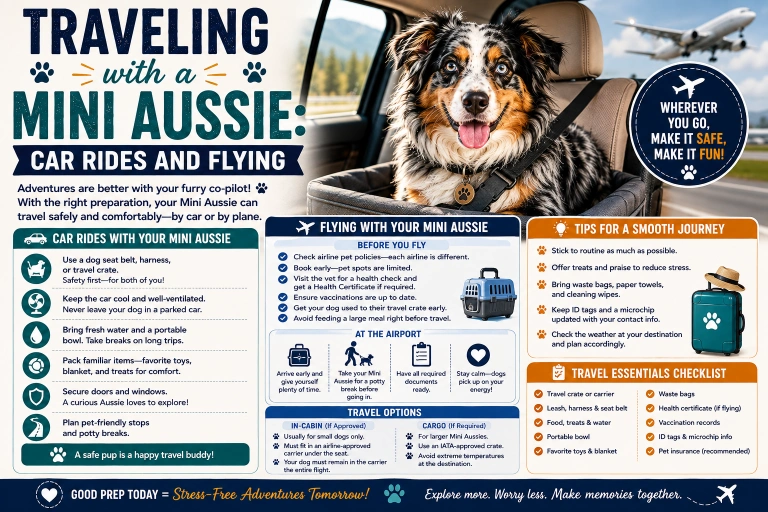
A dog seatbelt harness or a secured crate is safer than letting the dog ride loose, an unrestrained dog is a projectile risk in a sudden stop and a distraction risk while driving. Introduce car rides gradually with short, positive trips (not just vet visits) so the dog associates the car with good outcomes, not just stressful destinations. For longer trips, plan stops every 2-3 hours for bathroom breaks and a chance to burn energy.
Flying
Most Mini Aussies (20-40 lbs) are too large for in-cabin pet carriers on most airlines, meaning cargo hold transport is typically required for air travel, a genuine stressor worth weighing against driving or other options when possible. If cargo travel is necessary: book direct flights to minimize handling and layover stress, avoid extreme temperature days, use an airline-approved hard-sided crate the dog is already comfortable in, and check specific airline pet policies well in advance since requirements vary significantly.
Hotel and Lodging Prep
Book pet-friendly accommodations in advance and confirm their specific pet policy (size limits, fees, restricted areas). Bring familiar bedding and toys to reduce the stress of an unfamiliar environment, and never leave the dog unsupervised in a hotel room until you’re confident they won’t be destructive or vocal when alone in a new place, test this incrementally rather than assuming.
Before Any Trip
- Update ID tags and microchip information
- Bring enough of the dog’s regular food to avoid a sudden diet change, which can cause GI upset
- Pack a basic first-aid kit and know the nearest emergency vet at your destination
- Ensure vaccinations are current, especially for air travel or crossing state/country lines
- Exercise the dog thoroughly before travel days, a tired dog handles travel stress noticeably better
Never Leave a Mini Aussie Alone in a Parked Car
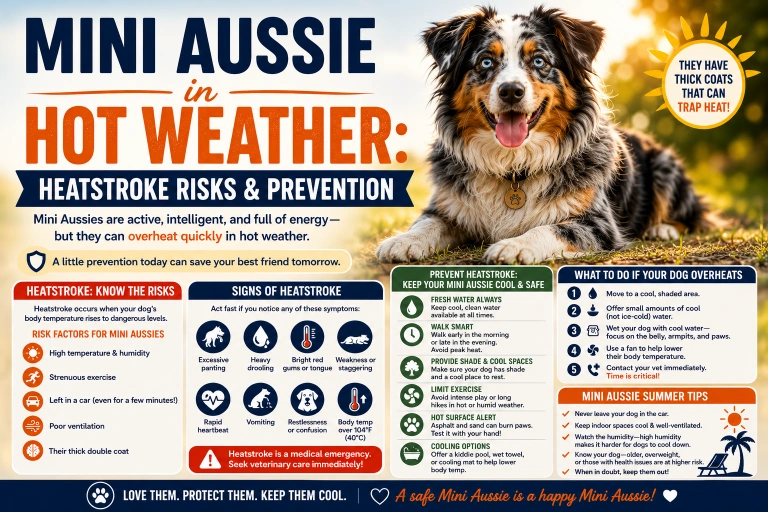
This deserves its own heading because it’s the single most dangerous travel mistake, and it happens fast. On an 75F day, a car’s interior can climb past 100F in minutes even with windows cracked. If you’re stopping somewhere the dog can’t come inside, plan a different stop. Our heat safety guide covers exactly how quickly heatstroke sets in and what the early signs look like. Cold weather has its own risks too, a car left running in freezing temperatures for warmth carries carbon monoxide risk, and one that isn’t can get dangerously cold fast, see our cold weather guide for specifics.
Motion Sickness and Travel Anxiety
Puppies are more prone to car sickness than adults since the inner ear structures involved in balance aren’t fully developed yet, most grow out of it. Signs include excessive drooling, lip-licking, whining, or vomiting shortly after the car starts moving. Feeding a light meal a couple hours before travel (not right before), keeping the car cool, and facing the crate forward can all help. A dog that’s genuinely anxious rather than just nauseated, panting, pacing, trying to escape the crate, benefits from the same desensitization approach used for separation anxiety: short, calm exposures that build up gradually rather than one long stressful trip.
Related Reading
- Training Guide, crate training basics
- Exercise Guide
- Hot Weather Safety
- Separation Anxiety Fix Guide
Frequently Asked Questions
Can Mini Aussies fly in the cabin?
Usually not, most Mini Aussies exceed the size/weight limits for in-cabin pet carriers on most airlines, meaning cargo hold transport is typically required.
How do I prepare my Mini Aussie for a long car ride?
Use a secured harness or crate, introduce car rides gradually with positive short trips first, and plan stops every 2-3 hours on longer journeys.
Is it safe to leave a Mini Aussie in the car for a few minutes?
Not in warm weather, ever. Even a “quick errand” can turn dangerous within minutes once the interior heats up. In genuinely cold weather it’s less immediately dangerous but still not recommended for more than a few minutes unattended.
What if my Mini Aussie gets carsick?
Skip food for a couple hours before travel, keep the car cool and well-ventilated, and consider a forward-facing crate position. Most puppies outgrow motion sickness; if it persists into adulthood, talk to your vet about anti-nausea options for travel days.