Mini Aussie Life Expectancy: What Affects How Long They Live
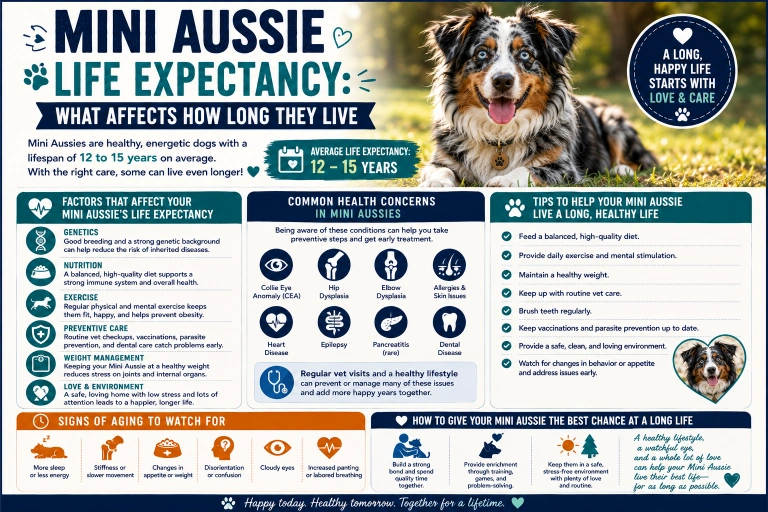
Short answer: 12-15 years is the typical Mini Aussie lifespan, and the factors within your control, weight, exercise, genetic screening, and dental/preventive care, make a real, measurable difference in reaching the upper end of that range.
What Actually Drives Lifespan in This Breed
| Factor | Impact |
|---|---|
| Genetics / breeder health testing | High, OFA hips, MDR1, PRA/CEA testing reduces inherited disease risk |
| Body weight | High, excess weight accelerates joint deterioration and raises risk of several chronic conditions |
| Exercise & mental stimulation | Moderate-high, affects both physical health and stress-related conditions |
| Dental care | Moderate, untreated dental disease is linked to broader systemic health issues |
| Preventive vet care | Moderate-high, catching issues (especially eye and joint conditions) early changes outcomes |
| Spay/neuter timing | Moderate, current evidence suggests later timing (12-18 months) may reduce certain joint/cancer risks |
The Two Biggest Levers You Control
Weight management is arguably the single highest-leverage factor an owner controls directly, studies across breeds consistently show lean dogs living meaningfully longer than overweight dogs of the same breed, with fewer joint and metabolic problems along the way. Choosing a health-tested puppy from a breeder who provides OFA, MDR1, PRA, and CEA documentation reduces the odds of inherited conditions that shorten lifespan or quality of life, though it can’t eliminate genetic risk entirely.
Signs of Healthy Aging vs Concerning Decline
Normal aging: gradual energy decrease, slightly greying muzzle, somewhat longer recovery after exercise. Worth a vet visit: sudden behavior changes, rapid weight loss or gain, noticeable lameness, increased drinking/urination, or any lump that appears or changes. Catching age-related conditions (especially joint and eye issues, which this breed is predisposed to) early consistently improves outcomes and quality of life.
What Actually Shortens Lifespan in This Breed
Most Mini Aussies don’t die of old age in the abstract, they die of specific, largely predictable things. Orthopedic disease (especially hip dysplasia) doesn’t usually kill a dog directly, but it drives inactivity and weight gain that snowball into bigger problems. Undiagnosed MDR1 status is the one genuine wildcard on this list, a single wrong medication in a dog whose status was never tested can end badly even though the mutation itself causes zero day-to-day symptoms. Cancer rates climb with age like they do in most breeds, which is exactly why the annual senior wellness exam matters more after age 8 than it did at age 3.
A Realistic Longevity Checklist
None of this requires anything exotic. It’s mostly consistency over the entire life of the dog, not a single heroic decision:
- Keep them lean, you should feel ribs easily under a thin fat layer, not see them
- Get the MDR1 test done once, early, and tell every vet the result for the rest of the dog’s life
- Hit the daily exercise requirement, an under-exercised dog is more prone to anxiety-driven and metabolic problems, not just boredom
- Book annual wellness exams in the adult years, twice yearly once they cross into senior territory around 8
- Don’t skip dental care, it’s one of the most neglected and most preventable contributors to poor health in older dogs
Related Reading
- Complete Health Overview
- Nutrition Guide, weight management
- Exercise Needs Guide
- MDR1 Gene Guide
- Hip Dysplasia: Signs, Prevention, Treatment
Frequently Asked Questions
What is the average lifespan of a Mini Australian Shepherd?
12 to 15 years, a relatively long lifespan for a dog of their size, with proper care and genetic screening supporting the upper end of that range.
What’s the biggest factor an owner can control for lifespan?
Weight management is arguably the highest-leverage factor, since maintaining a lean body condition is consistently linked to longer lifespans and fewer joint and metabolic problems.
Do smaller dogs really live longer than bigger dogs?
Generally yes across dog breeds as a whole, but within this specific size class the difference between a Mini Aussie and a Standard Aussie is negligible, both average 12-15 years. Individual care matters far more than the size difference here.
Is it true that spaying or neutering affects how long they live?
The research is genuinely mixed. It can reduce certain reproductive cancer risks while being linked to a slightly higher risk of some joint issues depending on timing, which is why vets increasingly recommend waiting until 12-18 months for this breed rather than the traditional 6-month default.
What’s the single biggest health test I should insist on before getting a puppy?
If you can only get one thing from a breeder, make it the MDR1 DNA test result for both parents. Unlike hip or eye conditions, which develop gradually, an unknown MDR1 status can turn a routine vet visit into an emergency.