Mini Aussie vs Sheltie: Key Differences
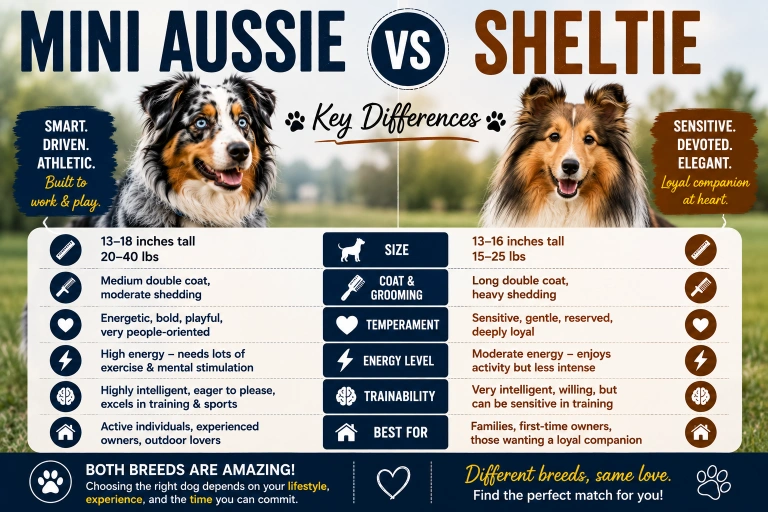
Short answer: both are small, highly intelligent herding breeds, but Shelties generally have lower exercise needs and a calmer default temperament, while Mini Aussies are more athletic, more work-driven, and typically better suited to owners wanting an active sport or working companion.
Side-by-Side Comparison
| Mini Australian Shepherd | Shetland Sheepdog | |
|---|---|---|
| Height | 13-18 inches | 13-16 inches |
| Energy level | High | Moderate-high |
| Exercise needs | 60-90+ min daily | 30-60 min daily |
| Barking tendency | Moderate-high | High, known for vocal alerting |
| Coat maintenance | Moderate-high | High, longer double coat |
| Herding drive | Strong, general-purpose | Strong, but often more reserved with strangers |
| Good for apartments | Possible with serious exercise commitment | Somewhat more apartment-adaptable |
Where They’re Similar
Both breeds descend from working herding stock, rank among the more trainable dog breeds, form close bonds with their families, and carry a real herding instinct that shows up as nipping, circling, or chasing without proper outlet and management.
Where They Genuinely Differ
Shelties tend to be more reserved and watchful with strangers by default, and their vocal alerting tendency is often more pronounced, they were bred partly for watchdog duties on small farms, not just herding. Mini Aussies generally have a higher physical exercise ceiling and are more commonly used in active dog sports like agility at a competitive level. Shelties’ coat, while gorgeous, typically requires more intensive brushing to prevent matting than a Mini Aussie’s coat.
Which One Fits Your Life?
If you want a dog that’s content with moderate daily exercise, tends to alert-bark at anything unusual, and is a bit more reserved with strangers, a Sheltie may fit better. If you want a dog built for serious daily activity, competitive dog sports, and a slightly more outgoing default temperament, the Mini Aussie is the stronger match. Neither is a low-maintenance breed in terms of grooming or mental engagement.
Barking: A Real Difference Worth Knowing
Shelties are famously vocal, bred partly to alert with their voice, and many owners find the barking more persistent than a Mini Aussie’s. Mini Aussies bark too, but it tends to be more situational (alerting, herding-related, boredom) than constant background noise. If barking in an apartment or close-neighbor setting is a real concern, this difference alone can matter more than the exercise comparison. Our calm-down guide covers what’s driving excess vocalization in this breed specifically and how to address it.
Related Reading
Frequently Asked Questions
Are Shelties calmer than Mini Aussies?
Generally yes, in terms of default exercise needs and overall demeanor, though individual dogs vary and both breeds are more active than average.
Do Shelties bark more than Mini Aussies?
Shelties are particularly known for alert barking due to their historical watchdog role, and this tendency is often more pronounced than in Mini Aussies.
Which breed is better with children?
Both do well with children they’re raised with, though Shelties tend to be more naturally cautious with unfamiliar kids’ sudden movements, while Mini Aussies may attempt to herd running children rather than avoid them. Supervision and training matter more than the breed choice itself here.
Do Shelties have the same MDR1 risk as Mini Aussies?
Yes, Shelties belong to the same herding-breed lineage carrying the MDR1 mutation at elevated rates. Any Sheltie or Mini Aussie owner should get this simple DNA test done before their dog receives certain common medications.